
Table of Contents
Introduction
Are you torn between the proven power of Retinol and the gentle promise of Bakuchiol? For those of us with Indian skin, the stakes are higher—one wrong move with harsh actives can turn a quest for glow into a battle with stubborn pigmentation. As we step into 2026, the debate of Bakuchiol vs Retinol has evolved, offering new solutions for melanin-rich tones that are prone to scarring. Whether you are searching for a safe natural retinol alternative or the most effective anti-aging treatment for our tropical climate, this guide delivers the definitive verdict on which ingredient truly deserves a spot in your routine.
Bakuchiol vs Retinol for Indian Skin: Key Takeaways: The “At-a-Glance” Verdict
- For Sensitive/Acne-Prone Indian Skin: Bakuchiol is the clear winner. It offers anti-aging benefits without the “purging” or irritation that leads to dark spots.
- For Deep Wrinkles & Fast Results: Retinol is still the gold standard, but requires strict sun protection to avoid hyperpigmentation.
- For Pregnancy: Bakuchiol is generally safe; Retinol is strictly unsafe.
- The “Glow” Factor: Both boost collagen, but Bakuchiol provides a “glass skin” effect without the initial dryness.
If you live in India, you know the struggle: the combination of intense sun, humidity, and pollution can wreak havoc on your skin. You want that ageless glow and smooth texture, but you’re terrified of the infamous “retinol purge”—that dread phase where skin peels and turns red.
For Indian skin (typically Fitzpatrick types III-VI), this isn’t just annoying; it’s risky. Inflammation on our skin often heals as stubborn dark spots (Post-Inflammatory Hyperpigmentation) rather than just fading away.
Enter the great debate of 2026: Bakuchiol vs. Retinol. Is the plant-based newcomer really a match for the dermatologist’s favorite? Let’s break down the science, the safety, and the soul of these ingredients to find the perfect remedy for your skin.
What Is the Difference? (The Basics)
Retinol: The High-Powered Standard
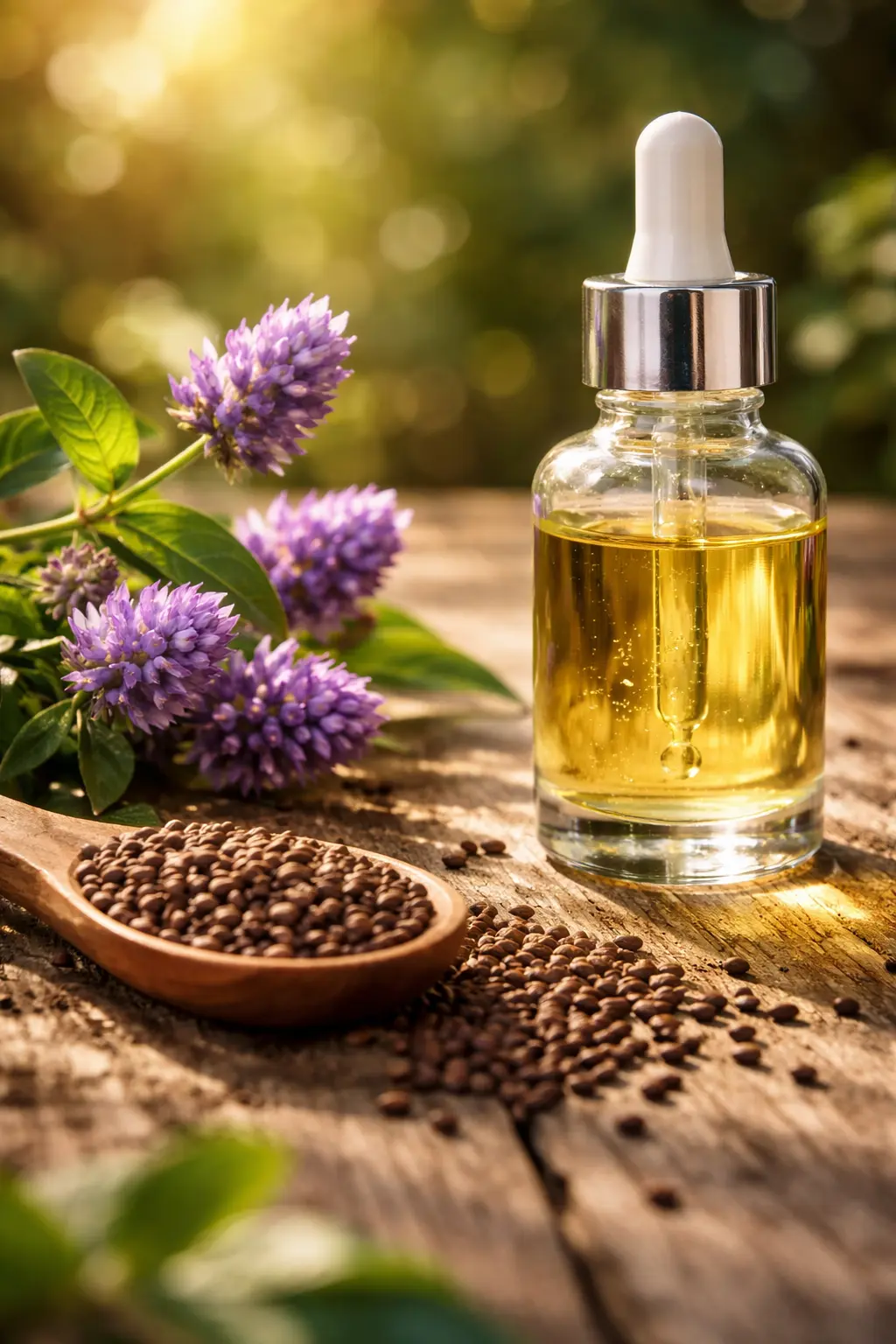
Retinol is a derivative of Vitamin A. It is arguably the most researched ingredient in skincare, famous for speeding up cell turnover and boosting collagen production. It works by communicating with your skin cells, telling them to behave like younger, healthier cells. However, this potency comes at a price: dryness, peeling, and increased sensitivity to the sun.
Bakuchiol: The Ancient Ayurvedic Secret
Bakuchiol (pronounced ba-koo-chee-all) is a plant-based extract derived from the seeds of the Psoralea corylifolia (Babchi) plant. While it has stormed the western beauty world recently, it has deep roots in Ayurveda and traditional Indian medicine. Technically, it is not a retinoid. However, studies show it mimics the effect of retinol—smoothing lines and fading spots—without the harsh side effects. It is the “gentle coach” to Retinol’s “strict drill sergeant”.
Why Indian Skin Needs Special Care
Indian skin has unique characteristics that change the rules of the game. We are more prone to Post-Inflammatory Hyperpigmentation (PIH).
- The Risk: If a product like Retinol irritates your skin, the resulting inflammation can trigger your melanin-producing cells to go into overdrive, leaving you with dark patches that take months to fade.
- The Heat Factor: In India’s hot, humid climate, heavy retinol creams can feel suffocating or cause sweating that irritates the skin further.
Retinol is faster, but if you skip sunscreen even once in the Indian sun while using Retinol, your pigmentation can worsen. Discover the best pigmentation creams recommended by dermatologists to pair safely with either active.
Bakuchiol vs. Retinol: The Ultimate Comparison Table
For a quick decision, here is how they stack up for brown skin concerns:
| Feature | Bakuchiol (Plant-Based) | Retinol (Vitamin A) |
| Source | Babchi Plant (Ayurvedic) | Synthetic Vitamin A |
| Best For | Sensitive skin, beginners, sun-exposed lifestyles | Deep wrinkles, severe acne, thick skin |
| Irritation Risk | Low: Minimal to no stinging | High: Dryness, redness, peeling common |
| Sun Sensitivity | Safe: Can use Day or Night | High Risk: Night use only; SPF mandatory |
| Pigmentation | Fades spots slowly & safely | Fades spots faster, but risk of PIH if burned |
| Pregnancy Safe? | Yes (Generally safe) | No (Avoid strictly) |
| Time to See Results | Slow & Steady (8-12 weeks) | Faster (4-8 weeks) |
Deep Dive: Glow, Pigmentation & Anti-Aging
Which is Better for the “Glow”?
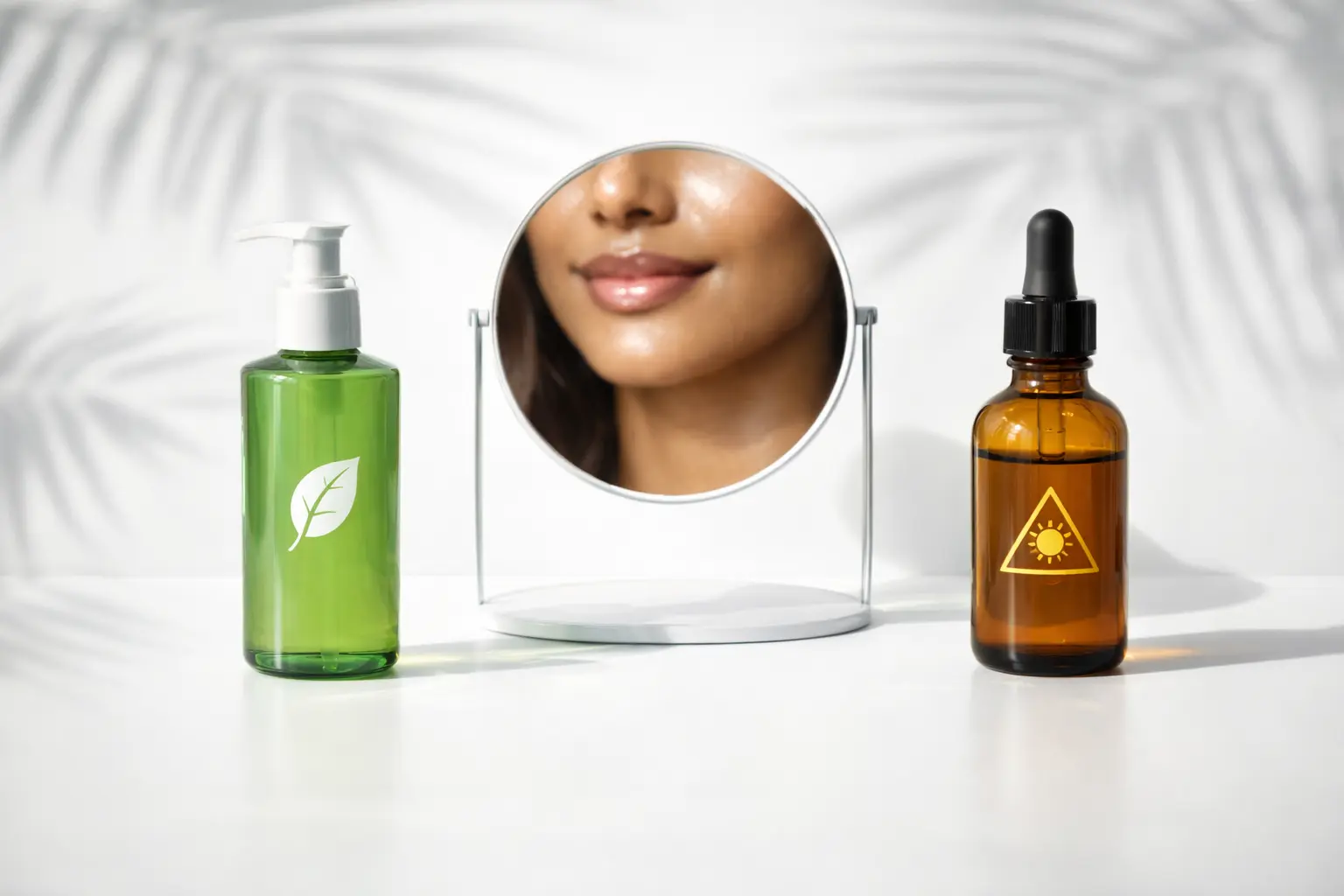
If your goal is that “glass skin” radiance, both deliver, but differently.
- Retinol exfoliates chemically, shedding dead top layers to reveal fresh skin underneath. This brings a bright glow, but often after a period of dullness and flaking.
- Bakuchiol works from within, boosting collagen and plumping the skin without stripping the moisture barrier. For Indian skin that tends to dehydrate in AC or summer heat, Bakuchiol often leaves the face looking dewy rather than dry.
Can Bakuchiol Actually Fade Pigmentation?
Yes, but patience is your primary ingredient. Bakuchiol inhibits melanin production and increases cell turnover, which helps fade acne marks and sun spots over time.
- Why choose it? It is safer for darker skin tones. Retinol is faster, but if you skip sunscreen even once in the Indian sun while using Retinol, your pigmentation can worsen. Bakuchiol is the “risk-free” route to even skin tone.
The Anti-Aging Verdict
Retinol is still the king of erasing deep, etched-in wrinkles. If you are 40+ with significant sun damage, Retinol (used carefully) might be necessary. However, for fine lines, early signs of aging, and maintenance in your 20s and 30s, Bakuchiol has been clinically proven to be just as effective as Retinol, just with a slower timeline.
Enhance results with simple DIY anti-aging face masks using hibiscus for extra collagen support.
The Melanin Factor: Why Indian Skin Reacts Differently
When analyzing Bakuchiol vs Retinol for Indian Skin, we cannot ignore the unique biology of melanin-rich skin. Unlike lighter skin tones, Indian skin is significantly more prone to pigmentation issues triggered by inflammation. This biological difference makes the choice of active ingredients critical.
While Retinol is undeniably effective for accelerating cell renewal, its high potency comes with a risk: irritation that can paradoxically lead to new dark spots. This phenomenon, known as Post-Inflammatory Hyperpigmentation (PIH), occurs when the skin becomes inflamed and overproduces melanin in response. For this reason, using high-strength Retinol for sensitive Indian skin can be a double-edged sword; if it causes redness or peeling in our harsh sun and humidity, it may leave behind stubborn dark marks that take months to fade.
This is where Bakuchiol for pigmentation shines as a safer contender. Research indicates that Bakuchiol targets pigmentation and dark spots effectively, but it does so without the “angry” phase of irritation associated with synthetic retinoids. It works on the same pathways to reduce melanin synthesis but remains gentle enough to avoid triggering the PIH response, making it a stable choice for those battling uneven skin tone in tropical climates. For Indian users dealing with tan or sun spots, Bakuchiol offers a way to treat discoloration without the constant fear of burning.
Does Bakuchiol Really Work on Indian Skin?
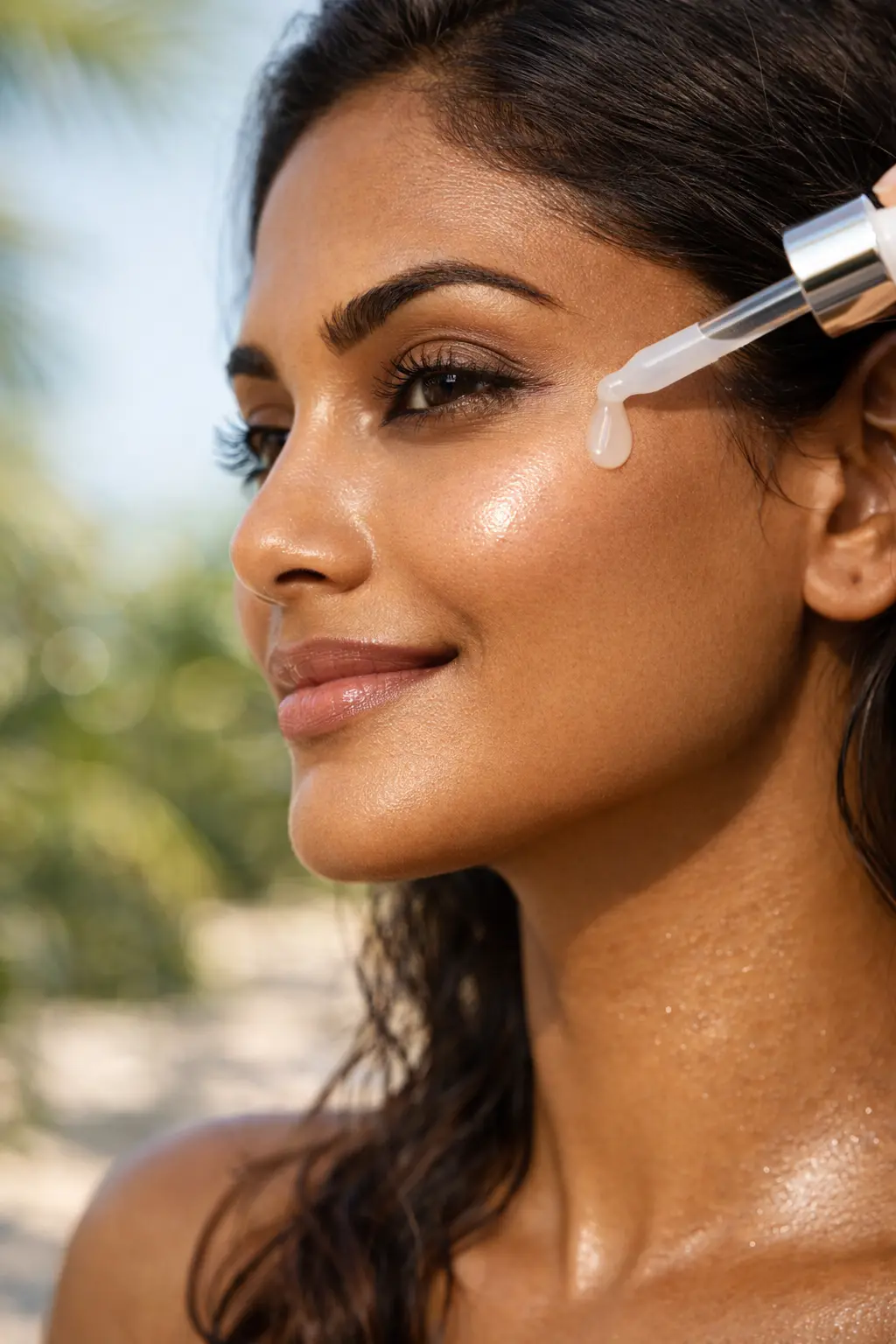
Absolutely. In fact, many dermatologists in India are switching patients to Bakuchiol because it aligns better with our tropical climate and lifestyle.
- No Sun Sensitivity: Unlike Retinol, Bakuchiol does not break down in the sun or make your skin hypersensitive to UV rays. This is a game-changer if you commute in the sun or can’t reapply sunscreen every two hours.
- The “Sandwich” Method is Optional: With Retinol, you often need to layer moisturizer underneath and over it (buffering) to stop the burning. Bakuchiol can usually be applied directly to clean skin.
How to Build Your Routine: A Step-by-Step Guide
Choosing between Bakuchiol vs Retinol is only half the battle; knowing how to layer them is the secret to success. While Retinol requires careful buffering to avoid side effects, Bakuchiol plays well with other ingredients. To maximize results without compromising your skin barrier, follow these tailored routines.
Option 1: The “Safe & Steady” (Bakuchiol Focus)
Best for: Beginners, pregnancy, and those seeking a natural retinol alternative.
- Morning: Cleanse → Vitamin C Serum → Bakuchiol Serum → Moisturizer → SPF 50.
- Why: Unlike Retinol, which degrades in sunlight, Bakuchiol is photostable and can be used during the day. It pairs beautifully with Vitamin C; while Retinol typically cannot be mixed with Vitamin C due to pH conflicts, Bakuchiol faces no such issues.
- Evening: Double Cleanse → Hyaluronic Acid → Bakuchiol → Night Cream. Build around a complete night skincare routine to maximize bakuchiol’s repair benefits overnight.
- Why: It works in sync with your skin’s overnight repair mode to boost collagen without the drying effects often seen with synthetic options.
Option 2: The “Sandwich Method” (Retinol Focus)
Best for: Experienced users targeting deep wrinkles.
- Evening Only: Cleanse → Lightweight Moisturizer (Wait 5 mins) → Pea-sized Retinol → Heavy Moisturizer. Since retinol heightens sun sensitivity, always follow with the best sunscreens for dry skin recommended by dermatologists the next morning.
- Why: This “buffering” technique creates a barrier that slows down absorption, making Retinol for sensitive Indian skin much more tolerable. Remember, Retinol increases sun sensitivity significantly, so it must be restricted to nighttime use.
Option 3: The “Hybrid” Approach
Best for: Maximum anti-aging without irritation.
- Morning: Bakuchiol (for antioxidant protection and glow).
- Evening: Retinol (for deep repair).
- Verdict: If your skin can tolerate it, this split routine allows you to leverage the benefits of a natural retinol alternative during the day while utilizing the potency of Retinol at night. This ensures you are fighting aging around the clock without overloading your skin with harsh actives at once.
FAQs: Your Common Questions Answered
Can I use Bakuchiol and Retinol together?
Yes, but proceed with caution! Some experts suggest using Bakuchiol in the morning (for protection) and Retinol at night (for repair). However, mixing them in one routine might be too active for sensitive skin. Start with one.
Is Bakuchiol safe during pregnancy?
This is one of its biggest selling points. Because it is not related to Vitamin A, Bakuchiol is widely considered safe for pregnancy and breastfeeding, whereas Retinol has been linked to birth defects and must be avoided. Note: Always consult your doctor before starting new supplements or intense skincare.
Can teenagers use these ingredients?
Teens with acne can benefit from Bakuchiol’s antibacterial properties without the harshness of Retinol. Retinol is usually recommended for teens only under a doctor’s supervision for severe acne.
Explore gentle skincare routines for teens before introducing actives.
The “Pure Remedy” Verdict
At Pure Remedy Solutions, we believe in working with your body, not forcing it.
Choose Bakuchiol If:
- You love the idea of Ayurvedic skincare backed by modern science.
- You have sensitive skin, rosacea, or are prone to burning.
- You want a low-maintenance routine that doesn’t require military-grade sun protection (though you should still wear SPF!).
- You are pregnant or breastfeeding.
Choose Retinol If:
- You have stubborn, deep cystic acne or deep wrinkles that haven’t responded to natural remedies.
- You are disciplined about using sunscreen and moisturizers daily.
- You are willing to endure a 4-6 week “adjustment phase” for faster results.
Pro Tip: If you are new to actives, start with Bakuchiol. It’s the kindest way to introduce your skin to cell-turnover therapy. You can always graduate to a gentle Retinol later if needed.
Disclaimer: This content is for informational purposes only and does not constitute medical advice. Always patch test new products behind your ear for 48 hours before full use.

Pandian K S — 65-year-old retired Professor of Geology from Adhiparasakthi Engineering College, Melmaruvathur (1985–2010); former Tamil Language Expert at China Radio International, Beijing (2011–2012); freelance English–Tamil translator/editor and Quality Manager for 35+ years collaborating with major MNCs including TransPerfect Inc. and FACIT.org.
Active blogger on Pure Remedy Solutions since August 2024, where he has published over 280 posts on skincare, haircare, digestive health, immune support, stress and anxiety relief. This article reflects his research and personal experience with natural and herbal remedies.
Contact: [email protected]
Last reviewed: 15 September 2025